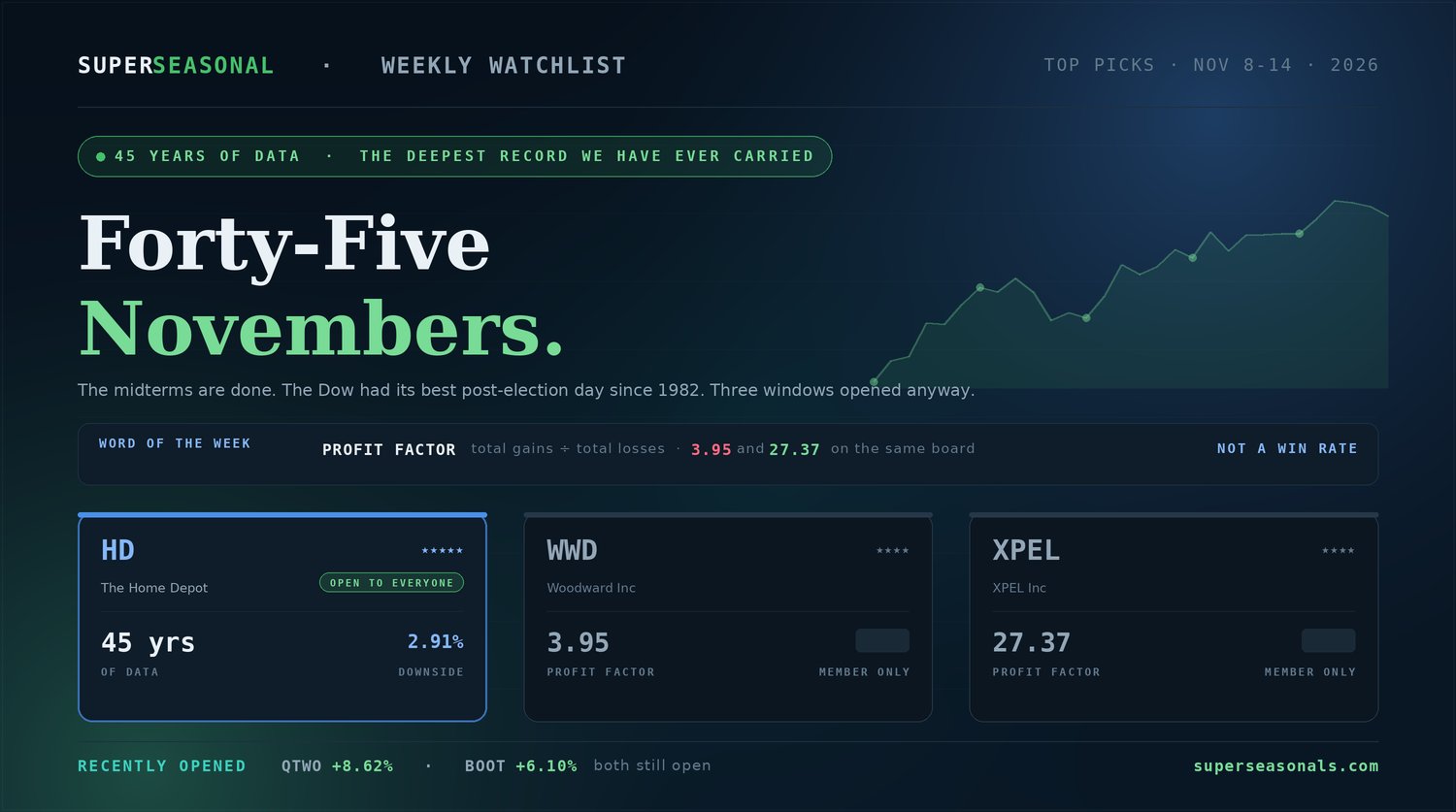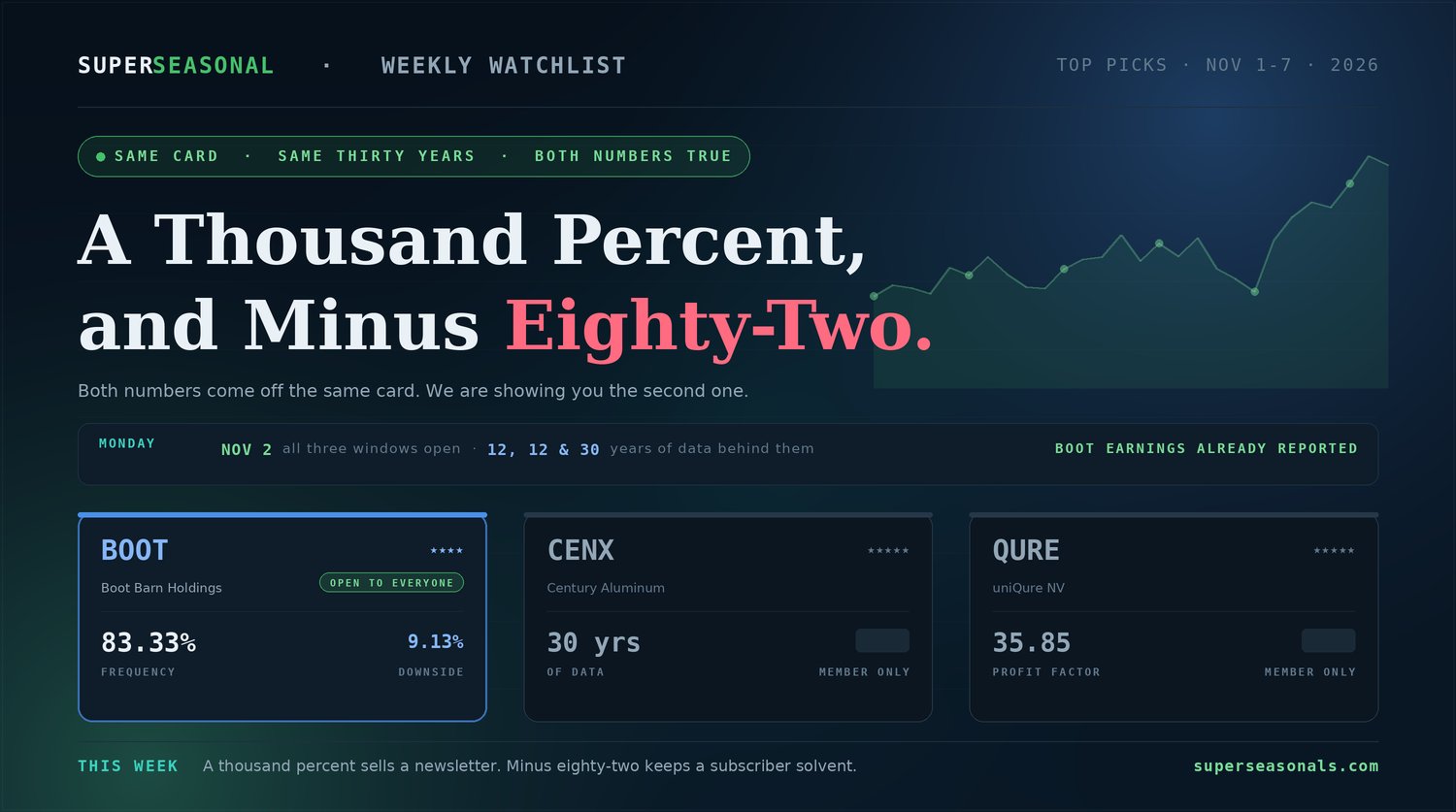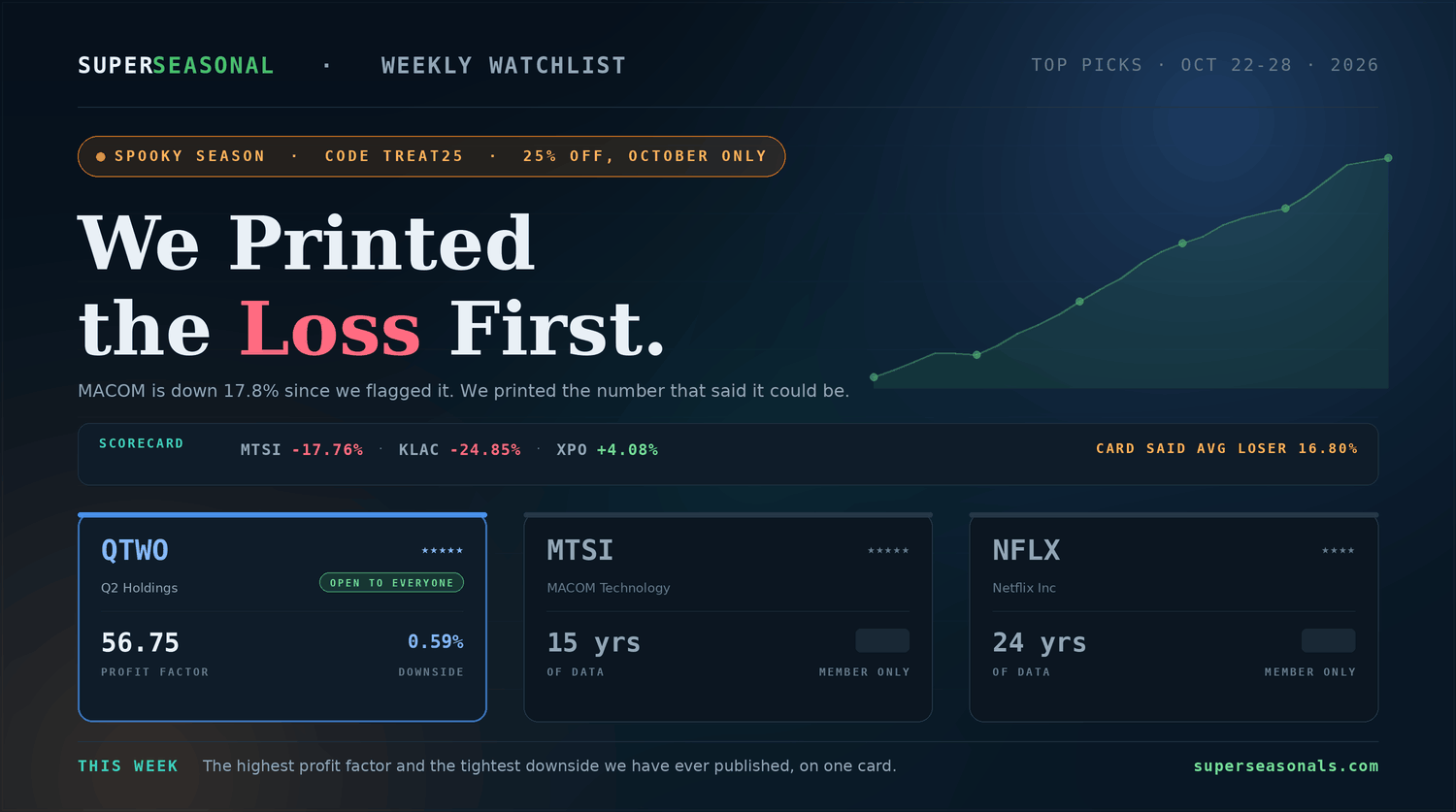
Next Week Is Loud.
Your Plan Shouldn't Be.
Week of September 8 · GRPN · NVMI · TFIN
A month ago a September hike was a one-in-three long shot. It is now the market's base case at roughly 66%. Five days, four market-moving events, and three setups that were picked before any of it made the news.
Two Workshops. Six Days Apart. Then the Fed Speaks.
The calendar did something unusual this September: the two live sessions land inside the same week the market gets its last inflation print before a likely rate hike. Learn the strategy on the 9th. Learn how to combine it on the 14th. Watch the Fed move on the 16th.
Two ideas anchor the second session. PPD Arbitrage — what emerges when you combine trades across different expirations. And Profit Stacking — structuring a combination to cut exposure while attempting to preserve the profit potential you started with.
That is a 70% discount off the final price as the workshop draws closer.
Reserve Your Seat NowFrom long shot to base case in six days
Watch the whole arc, because it is a lesson in how fast a narrative flips. A month ago, September hike odds sat near 67%. Then July payrolls came in negative and the odds collapsed to roughly 36%. Then Warsh took the Jackson Hole podium on August 28, said the Fed still has “work to do,” and the odds doubled back to around 66%. One analyst tracking it called the move a full round trip.
What tipped it was the inflation gauge Warsh himself keeps pointing at: PCE running near 3.7% over twelve months and 4.1% over six — not just above the 2% target, but accelerating underneath. The 10-year yield pushed to about 4.79%, its highest since January 2025. Barclays now expects two more hikes this year, September and December.
Here is the honest headline about this week's scan, and we would rather say it than bury it. All three names carry win rates between 64% and 73% — noticeably lower than the 80%-plus profiles we have been running. Two of them pair that with profit factors near 15.
That combination has a specific meaning: bigger payoffs, landed less often. These are slugger setups, not metronomes. It does not make them worse trades. It makes them differently sized trades — and knowing which kind you are holding before you enter is most of the job.
Same edge. Far more of the truth.
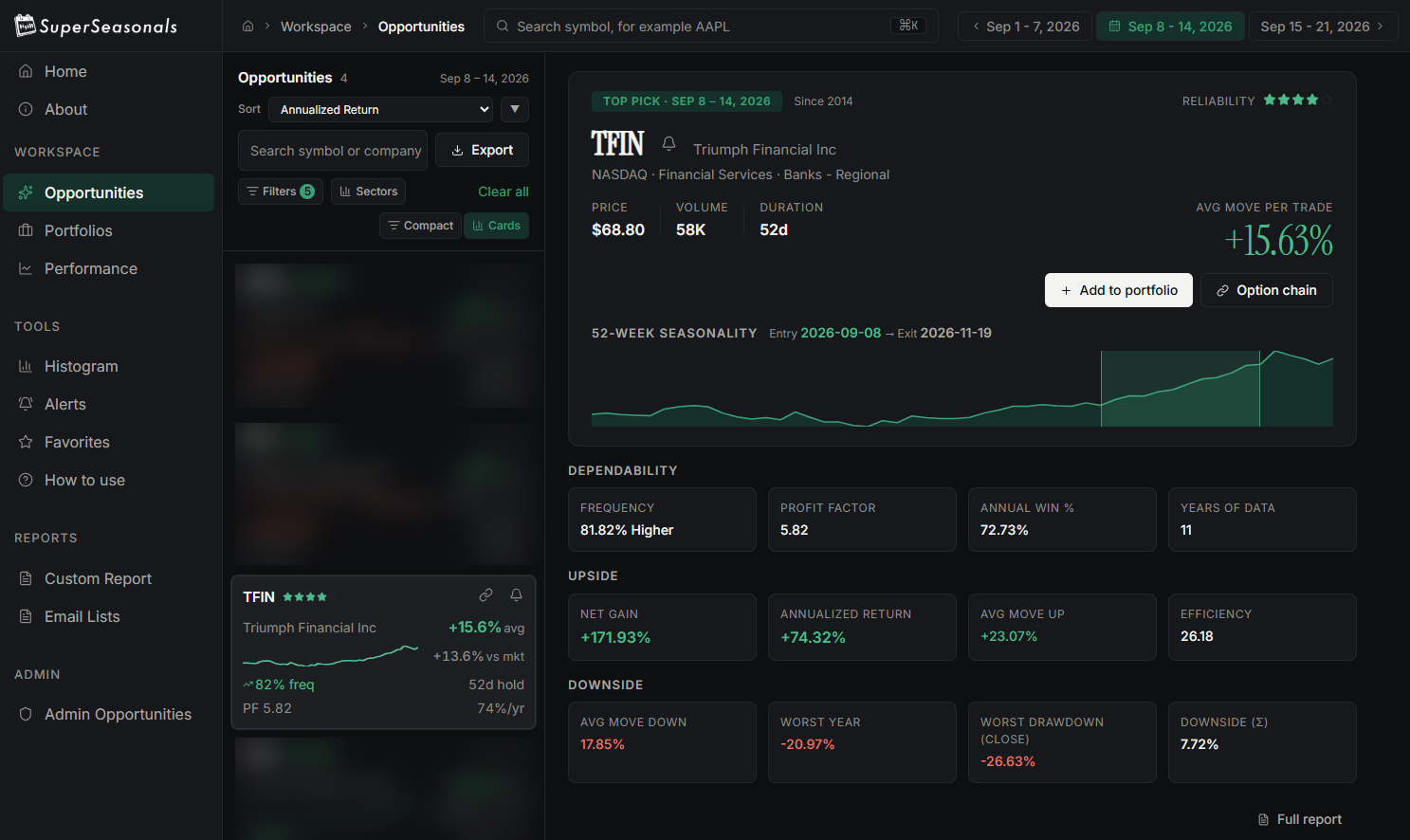
The old format gave you four numbers. The new Super Seasonal gives you twelve, split into dependability, upside and downside — including the worst year and the worst drawdown on record. TFIN below is our showcase this week, published in full so you can see exactly what changed.
The comeback nobody scripted
Yes, that Groupon. And before you scroll past: this window carries the highest frequency (85.71%) and the highest annualized return (+106.15%) on the list, with a 14.84 profit factor. It also carries a 64.29% annual win rate — the lowest we have printed in months.
Read those two numbers together, because they are the entire personality of this trade. A big profit factor next to a middling win rate means one thing: when it works it works enormously, and it works less often than you would like. This is not a metronome. It is a slugger with a high strikeout rate.
The business is a genuine turnaround-in-progress. Q2 revenue of $124.7 million was roughly flat year-over-year, and the company is still lossmaking — but adjusted EBITDA came in at the top of guidance and free cash flow hit $15 million. Management reaffirmed full-year revenue of $513–$523 million with adjusted EBITDA of $75–$80 million and free cash flow of at least $60 million. The engine underneath is Project Foundry: an AI rebuild of the tech stack, a 20% headcount cut, AI voice agents pitching merchants, and Groupon IQ generating deals. The CEO wants the company “AI fluent” by year end.
The stock is up roughly 123% over twelve months — and has given back about 27% in the last thirty days, to around $18.50. That gap is the setup. The three analysts covering it average a $36 target, roughly 91% above the recent price, and consensus now models a swing from a $1.51 per-share loss to $0.92 of profit next year.
Goldman Sachs raised its target to $22 — and kept a Sell rating. Trailing twelve-month net loss sits near $125.5 million, and Q1 showed no tangible SG&A savings despite the cost programme. At roughly 15.9x EV/EBITDA against Yelp near 5.7x, you are paying a premium for a turnaround that has not yet proven itself in the margin line. Q3 free cash flow is guided negative.
GRPN is the boom-or-bust seat on this week's list: best frequency, best annualized return, a 14.84 profit factor — and the lowest win rate here by a nose. The AI turnaround is real enough to have doubled the stock in a year and shaky enough that Goldman still says sell. Size it like the slugger it is.
The pick-and-shovel AI trade
NVMI's profile is GRPN's near-twin: a big 14.25 profit factor and an 84% frequency, sitting on a 64% annual win rate — the lowest of the three. Its +70.73% annualized return is the most modest here. Same personality, calmer magnitude.
Nova is an Israeli company that makes optical and X-ray metrology systems — the machines that measure whether a chip has actually been built correctly, at scales where a rounding error is a scrapped wafer. Every advanced logic node, every DRAM upgrade, every stack of advanced packaging needs more measurement, not less. It is the toll booth on the AI build-out, and it does not need to pick which chip designer wins.
The numbers back the story. First-quarter revenue of $235.3 million rose 10% and beat estimates by 3.7%; EPS of $2.18 beat by 2.7%; net income reached $69.3 million. Full-year 2025 revenue landed at $880.6 million, and the company opened a Mannheim facility that triples its advanced-packaging metrology capacity. The stock is up roughly 44% over twelve months.
Wall Street is stacked on the bull side: an average target near $597.63 implying about 22% upside, with Jefferies at $640, Evercore and Barclays at $600, and Citi at $595. Eight analysts, Buy consensus.
Nova's own revenue is forecast to grow about 15% a year over the next three years — against roughly 22% for the US semiconductor industry. That is a quality business growing slower than its sector, which is a valuation problem if the multiple already assumes leadership. Morgan Stanley sits at Equal Weight with a $494 target, essentially flat to the price. And Q1 profit margin slipped to 29% from 30% on higher expenses.
NVMI is the sober way to own the AI capex cycle: an essential measurement franchise with a beat-and-raise cadence and a $597 average target. But it has the lowest win rate on the list, its forecast growth trails its own industry, and Morgan Stanley's Equal Weight sits right at the current price. Quality, at a price that already knows it.
This week's showcase — the full readout
This is the one we put on the screenshot, and it is the one that best explains why the new platform matters. TFIN has the best annual win rate on the list at 72.73% and a modest 5.82 profit factor. Look one band lower and the picture completes itself.
A 7.72% downside sigma, a worst year of -20.97% and a worst closing drawdown of -26.63% — the roughest downside record we have ever printed. Against that: a +171.93% net gain and a +23.07% average move up. This trade wins more often than anything else here and hurts more when it loses. Under the old four-stat format you would have seen the 72.73% and stopped. Now you see the whole trade.
Triumph is not a normal bank. It is a transportation-focused fintech — payments, factoring, banking and intelligence built for freight. TBK Bank, LoadPay, the Triumph Network. Its data touches roughly 70% of North American brokered freight and 170,000-plus carriers, and it has been turning that into product: RFP Manager for lane-level contract pricing, and Market Rate Intelligence now embedded inside PCS Software's TMS. Q2 earnings surged on Factoring and Payments growth as the freight market rebounded.
The freight cycle is the whole thesis. Triumph is a leveraged bet on trucking volumes recovering, and the recent quarter delivered exactly that. D.A. Davidson lifted its target to $82 from $65, and a second desk moved to $82 from $70 — against a share price near $68.80 and a 52-week range of $46.43 to $83.52.
One: this is a 52-day hold running September 8 to November 19 — it runs straight through the September 16 Fed decision, October CPI, and Triumph's own October 21 earnings. Unlike our recent 15-day windows, you are not out before the noise. Two: those target raises came with Hold ratings attached; the consensus is neutral, not bullish. Three: a P/E near 50 on a $1.76 billion small-cap bank, in a rate environment that just turned hostile.
A regional bank with a freight-cycle engine is genuinely two-sided here: higher-for-longer rates can widen net interest margin, but they also squeeze the small carriers and brokers Triumph finances. With hike odds near 66% into a decision that lands inside this hold, TFIN is the name on this list most directly exposed to what the Fed does on the 16th.
Best win rate here (72.73%), a genuinely differentiated freight-fintech franchise, and fresh $82 targets against a $68.80 price. But it carries the roughest downside record we publish — a -26.63% worst drawdown and 7.72% sigma — on a 52-day hold that spans the Fed, CPI and its own earnings. High conviction, wide stops, small size.
The three, side by side
| Ticker | Frequency | Profit Factor | Ann. Return | Annual Win % | Personality |
|---|---|---|---|---|---|
| GRPNGroupon | 85.71% | 14.84 | +106.15% | 64.29% | Big swings, lower hit rate |
| NVMINova Ltd. | 84% | 14.25 | +70.73% | 64% | Same shape, calmer scale |
| TFINTriumph Financial | 81.82% | 5.82 | +74.32% | 72.73% | Most consistent, deepest drawdown |
The market gets loud. Your process shouldn't flinch.
In six days a single speech moved September from a long shot to a coin flip to the base case. Everyone holding an open-ended position spent that week rewriting their thesis on the fly. The dates on this week's picks were set before any of it happened.
The goal was never to trade more. It was to trade fewer, better-prepared ideas — and to spend the rest of the week not thinking about them.
Sign Up to View Full Trade DetailsThe Big Picture
One week, four events, three setups with three different jobs.
One structural note we will not soften. Our last two issues closed before the FOMC. This one does not. TFIN's window runs September 8 to November 19 — straight through a likely rate hike, October's CPI, and Triumph's own October 21 earnings. That is a longer, noisier hold than we have run in a month, and it is exactly why the downside band is printed in full beside it.
Two of these three win big and win less often. One wins more often and falls harder. None of them is wrong — they are just different tools, and the numbers tell you which is which before you commit a dollar. That is the whole product in a sentence.
Sign Up to View Full Trade DetailsSuper Seasonal Trade Desk
Don't Stop at the Strategy. Learn to Combine It.
Here is the idea in one line. A trade carries $3,000 of risk. A properly structured combination reduces that exposure to $1,000 while attempting to preserve the original profit potential. You have potentially freed up $2,000 of risk you were already willing to take — capital you may be able to deploy into another quality opportunity.
That is Profit Stacking, and it is the centrepiece of the September 14 session. If you are already attending the Strategy Workshop on the 9th, you can add it now.
You are receiving this because of your involvement with SmartTrading — your participation level has earned the discount below. When this workshop opens to the general trading public the cost will be $2,997, and as the seminar approaches that price goes to $4,997.
A 70% discount off the final price — but only until September 7th.
Reserve Your Seat NowAttendee-exclusive pricing. Examples shown are illustrative of the concepts taught and are not a projection of results; combining option positions involves risk, including the risk of loss. Nothing here is personalized financial advice.