
– Where the calendar meets the catalyst.
Most retail traders look at charts.
The smart ones look at patterns.
The professionals? They ask one more question:
“Why does this pattern exist?”
Seasonality without context is trivia.
Seasonality with a driver is an edge.
As we head into the first full week of March, we’re transitioning from winter defensives into early-spring repositioning. Funds are reallocating. Energy desks are adjusting shoulder-season exposure. Institutions are digesting Q4 earnings and rotating toward Q2 narratives.
From this week’s SuperSeasonal scan, three names stand out—not just statistically, but fundamentally.

Natural Gas’s Quiet Spring Sweet Spot
- Frequency Higher: 81.6%
- Profit Factor: 10.58
- Combined Net Gain: +4.19%
- Annualized Return: 71%+

On paper, those are institutional-quality stats.
Now let’s talk about the why.
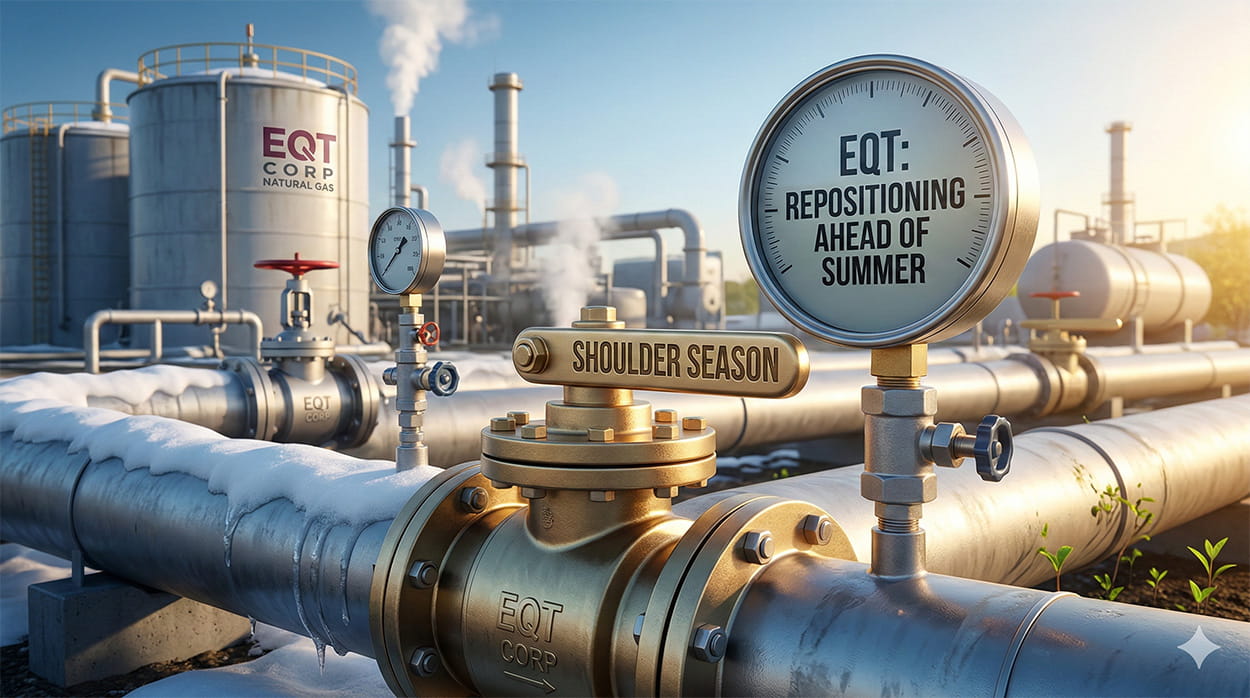
We’re entering what energy traders call the “shoulder season.” Winter heating demand fades. Storage expectations shift. Forward natural gas contracts begin pricing summer cooling demand.
EQT is the largest U.S. natural gas producer. This time of year:
- Funds reposition ahead of summer electricity demand.
- Utilities begin hedging future supply.
- Energy equities often move before the commodity does.
Broad market overlay:
If inflation expectations tick higher, or bond yields rise, energy often becomes a relative strength play.
Sector sentiment:
Energy has been under-owned by growth-heavy retail portfolios. When rotation happens, it happens quickly.
This is not just a chart pattern. It’s a supply-demand calendar shift.
Post-Earnings Repositioning + Q2 Anticipation
- Frequency Higher: 82.1%
- Profit Factor: 3.71
- Combined Net Gain: +4.37%
- Annualized Return: 58%+
- Avg Daily Volume: 53M (high liquidity)

This is the most liquid name on the list—and liquidity matters for retail traders.
The pattern here lines up with a classic institutional behavior:
- Q4 earnings are absorbed.
- Analysts revise forward guidance.
- Funds position ahead of Q2 consumer data and Prime-driven expectations.
Seasonally, March into late spring often benefits large-cap tech as:
- Portfolio managers re-balance after January rotation.
- AI and cloud narratives regain attention.
- Tax refund season boosts consumer spending expectations.

Intermarket driver:
If the Nasdaq remains firm and yields stabilize, mega-cap growth continues attracting passive inflows.
This isn’t just “Amazon goes up in March.”
It’s capital rotation + forward narrative positioning.
The Quiet Statistical Monster
- Frequency Higher: 96.5%
- Profit Factor: 52.09
- Combined Net Gain: +4.05%
- Annualized Return: 46%+

Let that sink in.
A 96% win rate historically during this window.
Now—why would a diagnostics company have a late-winter seasonal edge?
Two structural reasons:
- Insurance Deductible Reset Effect
At the start of the year, patients resume testing after deductible resets. - Post-holiday healthcare normalization
Elective and routine testing rebounds after year-end slowdowns.

Healthcare also tends to:
- Act defensively if markets wobble.
- Attract rotation when growth becomes extended.
If broad market volatility picks up, DGX can benefit from defensive capital flows.
This is the type of name retail traders often overlook because it’s not flashy.
Institutions don’t overlook it.
The Bigger Picture This Week
March is historically a transition month.
- Q1 earnings whispers begin.
- Energy recalibrates.
- Growth attempts continuation.
- Defensive names quietly accumulate.
Watch:
- Bond yields (10-year direction)
- Crude oil & natural gas futures
- Nasdaq relative strength vs. S&P
- XLE (Energy ETF) inflows
Seasonality works best when it aligns with:
- Sector strength
- Market trend
- Intermarket confirmation
Don’t trade these blindly.
Trade them when the tape agrees.
Important
For exact timing windows and statistical breakdowns—including the precise historical exit parameters- Log in to SuperSeasonal.com
The edge is in the execution
Final Thought
The average trader asks:
“What’s moving today?”
The disciplined trader asks:
“What tends to move this time of year—and why?”
That’s how you move from guessing…
to positioning.
Prepare smart. Trade disciplined.
We’ll see you next Sunday.
Chad Shirley
Disclaimer
The information contained in this newsletter is for educational and informational purposes only and should not be construed as personalized investment advice. All statistical data, including seasonal tendencies and historical performance metrics, are based on past market behavior. Past performance does not guarantee future results.
Trading and investing in stocks involve risk, including the possible loss of principal. Seasonal patterns, while historically observable, can fail due to changing market conditions, macroeconomic events, geopolitical developments, liquidity shifts, or unforeseen catalysts.
Readers should conduct their own due diligence and consider their financial situation, risk tolerance, and investment objectives before making any trading decisions. Nothing in this publication constitutes a recommendation to buy, sell, or hold any security. Positions mentioned may not be suitable for all investors.
SuperSeasonal.com is a research and analytics platform. It does not provide individualized financial advice or act as a registered investment advisor or broker-dealer.
Always consult with a qualified financial professional before making investment decisions.